Breaking News

LI News Radio 103.9 * Click the link below to listen Live online * Listen on your Amazon Echo device - Ask Alexa to play One Oh Three Nine L I News Radio

Politics News

Why Trump is going to Republican-leaning states for midterm election rallies

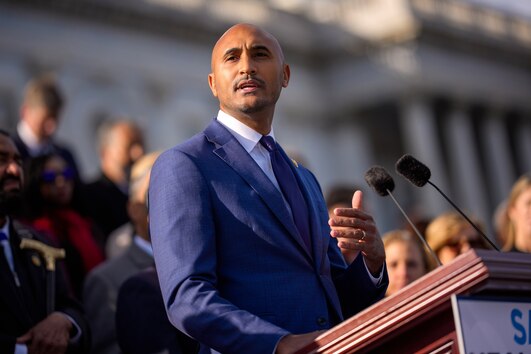
Rep. Shomari Figures speaks on the House steps on Nov. 12, 2025, in Washington, D.C. (Andrew Harnik/Getty Images)

(WASHINGTON) -- With just weeks until the high-stakes midterm elections, President Donald Trump is set to headline rallies in Republican-favoring states this week -- with critics asking why the president is not instead focusing on key battleground states instead.

Some Republicans and experts say the goal is to boost midterm election turnout among Republican voters more generally who might have been less motivated to vote this year, and that this sort of travel to "safe" states during midterm years is not unprecedented. One expert said Trump's low national approval ratings could be seen as a risk -- and a reason he’s not stumping in more competitive areas.

Trump will join a "Midterm Rally" on Thursday, Oct. 1 in Durant, Oklahoma, and another in Mobile, Alabama on Friday, Oct. 2, according to announcements by the Republican National Committee last week.

Both rallies will be in congressional districts and states that appear to favor the Republican Party in the 2026 midterm elections.

Durant, for instance, is located in Oklahoma's 2nd Congressional District, which Trump won by more than 50 percentage points in 2024, according to data compiled by the Associated Press. This district, held by GOP Rep. Josh Brecheen, is also expected to be solidly Republican in the midterms, as are the statewide governor and Senate races, according to ABC News race ratings.

Mobile, meanwhile, was redrawn after mid-decade redistricting to be in Alabama's 1st Congressional District. The redrawn district, favoriting Republicans, would have voted for Trump in 2024 by around 40 points.

The 2nd Congressional District, which formerly included part of Mobile, is currently represented by Democratic Rep. Shomari Figures, but now leans Republican post-redistricting, according to ABC News race ratings -- although Figures and his supporters plan to put up a fight to hold the seat. And the statewide Senate and governor races in Alabama are considered solid Republican, according to ABC News race ratings.

Trump will also be heading to states with more competitive races. Later in October, he is set to attend rallies in Ohio, Iowa and Nebraska -- states that voted for him in 2024 but are hosting competitive Senate races in 2026.

Trump, asked about the upcoming red-state campaign trips in the Oval Office on Monday, said "we have great people" in those races, and slammed the Democratic candidates.

But Democrats are arguing that Trump is going to red states like Alabama because Republicans are nervous.

"We're scaring the hell out of them," Democratic gubernatorial candidate and former Sen. Doug Jones argued on MS NOW on Sunday. "They think ... Alabama's a firewall. Now they've got to protect a firewall. Well, it's not a firewall anymore."

But Republicans say that Trump's red state rallies will benefit the GOP more broadly.

An official with the RNC made the case to ABC News on Thursday that the rallies will help turnout in neighboring media markets in Texas and Florida. Republicans are trying to hold on to a Senate seat and governorships in both states.

Kyle Kondik, an elections analyst and the managing editor of Sabato's Crystal Ball, told ABC News that he found the Oklahoma and Alabama events to be "head-scratchers," and didn't buy the media market argument: "Why not just go to Texas and Florida?"

Separately, RNC National Press Secretary Natalie Baldassarre said in an appearance on Newsmax on Monday that the GOP has the "resources" and "record cash on hand, so the goal here is to drive people to the polls."

Georgia-based Republican strategist Ryan Mahoney told ABC News he also felt Trump's travel to red states was about turning out voters who otherwise might not show up. He added that some Republican-base voters may be disenchanted by Trump because of the higher cost of living -- an issue that has plagued the president, according to recent polling.

"There's no shortage of states, solid-red districts, solid-red states [that] are starting to suffer with Republican base voters who lack enthusiasm and motivation to get out and vote," Mahoney said.

Still, Mahoney said the GOP should be more focused on competitive races: "it's not a good look for Republicans."

Matthew Dallek, a political historian at George Washington University, told ABC News there's merit to the argument that Trump will turn out unmotivated GOP voters with these rallies.

"Trump has this ability, at least when he's on the ballot, to turn out some people who don't typically vote, to kind of remake the electorate to some extent," he said.

But Dallek also pointed to low national approval ratings for Trump -- just 33% of Americans approve of Trump and 67% disapprove, according to a recent CNN poll -- that he said have created a "toxic" brand for the president, which he said could be why he is not stumping in more competitive areas.

Kondik was also skeptical that Trump appearing "front and center" at rallies may be helpful for unmotivated GOP voters who have fallen out of the president's coalition.

From a historical perspective, however, Dallek pointed out that it's not unprecedented for a sitting president to head to "safe" territory during a midterms election cycle. He pointed to Barack Obama, who, for instance, attended rallies in 2010 in Los Angeles and Maryland, as well as George W. Bush in 2006 (who attended rallies in states such as Indiana and Georgia.

"[Trump] is following a pattern that many of his predecessors have followed, which is when they are unpopular in midterm elections, to the extent they travel, they go to their base," he said.

ABC News' Hannah Demissie, Benjamin Siegel and Gaby Vinick contributed to this report.

Copyright © 2026, ABC Audio. All rights reserved.

Pro-Trump ad campaign was financed by DHS: Sources

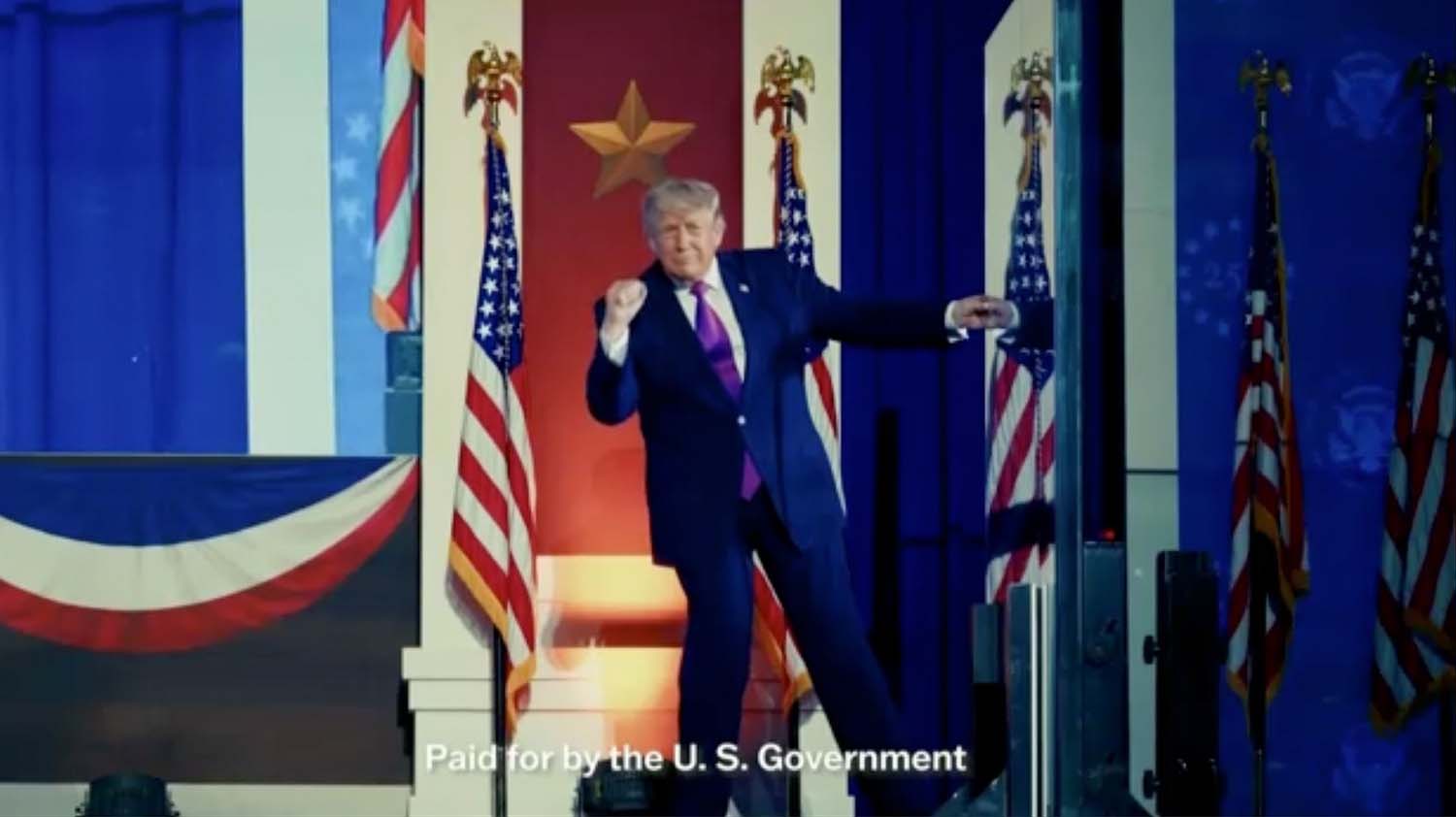
An ad that ran Sunday on NBC’s “Meet the Press” shows President Donald Trump at a speech at Mt. Rushmore on America’s 250th anniversary. (U.S. Government)

(WASHINGTON) -- The Trump administration used funds from the Department of Homeland Security to air TV ads featuring President Donald Trump in recent days, according to sources familiar with the matter. 

The money was moved into a U.S. Customs and Border Protection (CBP) account for "commemorative events" on Sept. 19, and federal contract data shows that a contract of $20 million was awarded the next day to the LMD Agency, a Maryland-based advertising agency for a "National Media Campaign." Days later, the ads began airing.

CBP is the the agency within DHS that is responsible for securing the nation's border and ports of entry. The funds appear to have been drawn from Trump's signature tax and spending bill passed in 2025. The bill provided $6.2 billion for a variety of border security improvements, but also for "commemorating efforts and events related to border security."

LMD Agency did not immediately respond to ABC's request for comment. The Wall Street Journal first reported the source of the federal funds. 

DHS has been known to use funds for advertising campaigns, including spending millions of advertisements encouraging people who are in the country illegally to self-deport. 

The federal government has spent at least $1.7 million to air three different TV ads featuring Trump in recent days, according to an estimate from AdImpact, which tracks and analyzes political ad spending across TV, digital and connected TV channels.

DHS directed inquires to the White House. In a statement to ABC News, a White House spokesperson said: "These public service announcements are about reminding Americans to love their country and understand what makes it worth defending, at home, at our borders, and abroad. The ad is educational and unapologetically patriotic. We should be proud of our country." 

Democrats on the Senate Appropriations Committee responded by sending a letter to Homeland Security Secretary Markwayne Mullin demanding he answer questions about the breakdown of the funds, whether the ads are expected to continue, and DHS's role in facilitating their airing.

"The American people deserve answers about how this president is literally stealing their tax dollars to air campaign ads celebrating himself -- while doing nothing to help them afford health care or housing," the letter says. 

Copyright © 2026, ABC Audio. All rights reserved.

Trump celebrates Senate passage of legislation to overhaul college sports

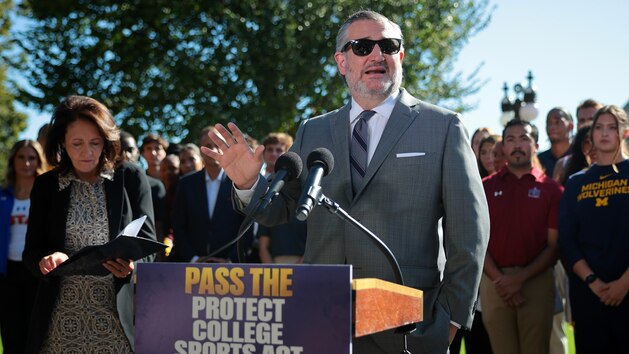
Senate Committee on Commerce, Science & Transportation Chairman Ted Cruz and ranking member Sen. Maria Cantwell hold a news conference with NCAA athletes and coaches about the Protect College Sports Act, Sept. 14, 2026, in Washington, D.C. (Chip Somodevilla/Getty Images)

(WASHINGTON) -- President Donald Trump celebrated the Senate's passage of the Protect College Sports Act, saying that the legislation will "save college sports" and is a "really big deal."

"This is a really big deal. It will not only save college sports, it will save the colleges themselves," Trump wrote in a Monday night social media post.

Trump has long been an advocate for this legislation and said in August that he would sign the bill "immediately" if it came across his desk -- urging both the House and Senate to advance it.

On Monday night, the Senate passed the act with a vote of 77-22, bringing a massive restructuring of college athletics one step closer.

The legislation establishes a federal framework for college athletics to create one set system over the current patchwork of differing state rules. It creates one rulebook on how athletes can earn money from their name, image and likeness (NIL) and puts a cap on the amount of money schools can directly share with their athletes. 

But it’s not just about money. The bill also deals with transfers, eligibility and media rights. Athletes can transfer to another school one time without losing a year of eligibility and student-athletes are given five years of eligibility with exceptions for certain circumstances such as a serious injury. The legislation also gives colleges the ability to negotiate broadcasting agreements collectively to give them more control over how their games are marketed and distributed. 

Supporters of the bill say that it will add much-needed stability to the world of college athletics that has rapidly changed in recent years due to increasing NIL deals and frequent transfers. Senators -- including Sen. Ted Cruz -- argue that creating one national set of rules will reduce uncertainty and establish clear guidelines for compensation, eligibility and media rights.

"This bill puts an end to the chaos plaguing college athletics. It protects NIL opportunities because student athletes deserve the opportunity to benefit from their talent, without being taken advantage of by unscrupulous agents and backdoor deals, it creates clear, enforceable rules for eligibility and transfers. It protects our traditions and rivalries," Cruz said on the Senate floor ahead of Monday's vote.

While the bill received bipartisan support in the Senate on Monday, there were still concerns from many senators, largely around the amount of leverage the bill gives to the NCAA. The NCAA will now be in charge of overseeing school compliance on certain portions of the bill while also being granted immunity from federal antitrust lawsuits when enforcing its rules.

Democratic Sen. Chris Murphy, one of the bill's opponents, argued that the legislation could give the NCAA greater legal protection and authority without giving athletes an equivalent role in negotiating the rules that govern them. 

"You don't need a bill of this sweeping scope to address what are a set of minor but important practices in college athletics that have gotten out of control. We could have either passed a very narrow bill here to address the agent issue and the transfer issue, or we could have done what happens in most industries, which is just say to the NCAA and to the colleges, tough luck. Congress isn't going to come in here and micromanage your relationship with the athletes. If you want to work something out, sit down and talk to the athletes about it," Murphy said.

On Monday night, the NCAA thanked the senators who supported the legislation and looked ahead to the next hurdle: House passage.

"The NCAA thanks the many senators who sponsored this bill -- including Senators Cruz, Cantwell, Schmitt and Coons -- as well as the many other senators who voted for the bill, for their bipartisan effort to protect this uniquely American tradition of college sports in the decades to come," the NCAA wrote in a social media post. "Now the bill moves to the U.S. House of Representatives and there is much work left to do to ensure student-athlete benefits are codified into federal law and future generations of young people can access those benefits and use college sports as the launching point for their careers."

The bipartisan piece of legislation still faces obstacles in the House.

The Congressional Black Caucus has come out against the bill because they believe it doesn't include strong enough protections and economic opportunities for Black athletes. Additionally, some conservative House members have expressed criticism for similar legislation, arguing the government is trying to have too much oversight over college sports.

The House remains out of session for their midterm recess and it is unlikely that they will be called back to Washington early to consider the legislation. 

So while the legislation is now in the red zone, it’s going to take more than a "tush push" to get it into the end zone and onto the president's desk.

Copyright © 2026, ABC Audio. All rights reserved.

Former special counsel Jack Smith to testify before Senate on Trump investigations

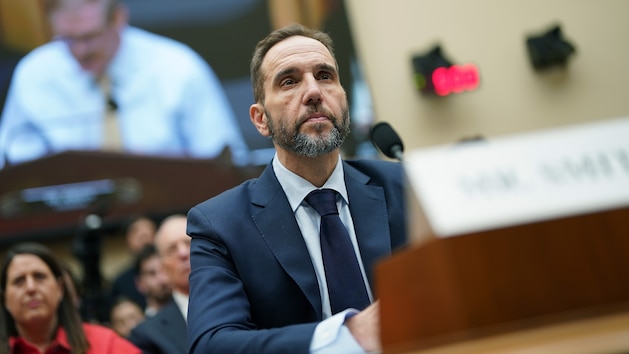
Former Special Counsel Jack Smith prepares to testify during a hearing before the House Judiciary Committee in the Rayburn House Office Building on Capitol Hill, Jan. 22, 2026, in Washington, D.C. (Al Drago/Getty Images)

Former special counsel Jack Smith is set to appear before the Senate Judiciary Committee on Tuesday to defend his two criminal investigations of President Donald Trump amid growing calls from Republicans that Smith himself face prosecution by Trump's Justice Department. 

Smith, who secured indictments against Trump over his efforts to overturn his 2020 election loss and his alleged unlawful retention of classified documents after leaving the White House, has repeatedly said he believes he could prove Trump's guilt beyond a reasonable doubt and defended the actions of his investigative team. 

Trump has long denied wrongdoing and neither case ultimately made it before a jury following his 2024 election victory, after which Smith moved to dismiss both indictments based on DOJ policy barring prosecution of a sitting president. 

In an opening statement to the committee obtained by ABC News, Smith is expected to say, "I stand by my decisions as Special Counsel, including my decision to bring charges against President Trump. I made these decisions without regard to President Trump’s political association, activities, beliefs, or candidacy in the 2024 presidential election." 

"If asked whether to prosecute a former President based on the same facts today, I would do so regardless of whether that President was a Republican or a Democrat," his statement says. 

Trump has repeatedly said Smith should face prosecution and he has become a central target of House and Senate Republicans, who have argued his investigations were fueled by political animus and represented a "weaponization" of the Justice Department.

Senate Democrats have cast Republicans' attacks on Smith as misleading and hypocritical in light of what they argue is Trump's blatant weaponization of the department to pursue his political enemies. 

Attorney General Todd Blanche said in July testimony that the department was investigating a criminal referral from Republicans who accused Smith of lying in prior public testimony before the House Judiciary Committee.

In a lengthy rebuttal to Blanche, Smith's attorneys argued the referral was based on "spurious" claims that took his testimony out of context in order to create a pretext for the Justice Department to investigate him. 

"During his testimony, Mr. Smith provided truthful, responsive answers and candidly discussed his work," Smith's attorneys said. "This referral reflects a chilling eagerness to weaponize the justice system by attacking a career, nonpartisan public servant who faithfully and fearlessly performed his duties by following the facts and the law."

In the nearly two years since Smith's office was shuttered following Trump's 2024 election win, nearly every prosecutor and line agent associated with Smith's investigation have either resigned or been fired. 

The Justice Department and FBI have also handed over scores of records from Smith's probes to Republican lawmakers who have released them in piecemeal disclosures alleging, without evidence, that they expose corruption or otherwise unethical behavior by Smith's investigative team. 

In Tuesday's hearing, specifically, Republicans are expected to accuse Smith of unlawfully targeting their phone records during the course of his investigation into Trump's efforts to overturn his 2020 election loss. 

Smith has repeatedly defended his office's actions with respect to the subpoenaed records, and has said the records were only targeted because they were made in the period where Trump and other White House officials were seeking to disrupt certification of Joe Biden's 2020 election win -- which ultimately led to the violent Jan. 6, 2021, assault on the U.S. Capitol. 

"I didn't choose those members, President Trump did," Smith said in prior testimony regarding lawmakers whose records his office obtained.

Another factor looming over Smith's Tuesday testimony is that he is technically barred from discussing details from his other criminal investigation of Trump's alleged unlawful retention of classified documents at his Mar-a-Lago resort. 

The Trump-appointed federal judge who previously dismissed the classified documents case, Aileen Cannon, has a standing order that prohibits Smith or any other government official from revealing information that could be part of his final report detailing the probe. An appeals court is currently weighing a lawsuit filed by First Amendment advocacy groups seeking to lift Cannon's order and make the report public. 

Copyright © 2026, ABC Audio. All rights reserved.

Top AI leaders to meet with Trump at White House amid dire warnings about technology

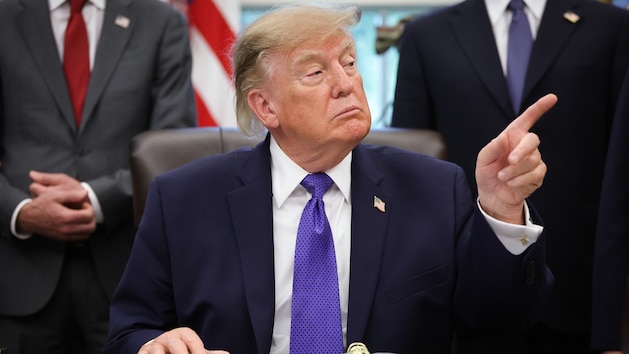
President Donald Trump answers questions from reporters during an announcement in the Oval Office at the White House, September 28, 2026 in Washington. (Kevin Dietsch/Getty Images)

Leaders of top artificial intelligence companies are set to attend a lunch meeting with President Donald Trump and House Speaker Mike Johnson at the White House on Tuesday amid growing fears about the threat of the rapidly innovating technology.

The meeting comes as AI leaders are issuing dire warnings about the threat of AI and calling for steps to slow it down before it outsmarts humans. Following those warnings, lawmakers are weighing what -- if any -- action should be taken.

Meta CEO Mark Zuckerberg will attend the meeting, a source familiar confirmed to ABC News. Another source familiar said that Dario Amodei, CEO of Anthropic will also attend. And Google CEO Sundar Pichai will also attend, a Google spokesperson confirmed to ABC News. Jensen Huang from Nvidia and Alex Karl from Palantir are also expected to attend, ABC News has confirmed.

Zuckerberg has pushed back on calls from other tech leaders to collectively slow down AI, saying "every lab has the responsibility and incentive to move at the pace required to train its models safely."

The meeting will also include other tech leaders.

This won't be the first time that top tech leaders have met with Trump on the issue. The Meta CEO also attended the state dinner at the White House for Chinese President Xi Jinping last week, along with the CEOs of OpenAI, Nvidia, Microsoft, Google, AMD, SpaceX and executives from Amazon and Apple. Amodei also had dinner with Trump late on Sunday night.'

The president has said that the warnings about the technology and calls to slow down AI development are a "hoax."

"AI taking over the World, destroying Humanity, and all other things bad, is a HOAX[...]," Trump said in a social media post in mid-September, before comparing the warnings to his impeachments.

The president has made clear that he does not believe in regulating the technology. Just last week while addressing the United Nations General Assembly, Trump said the U.S. "rejects" a global attempt to regulate AI.

Johnson told reporters two weeks ago about the meeting, saying there would be "a deliberate discussion about the responsibility of the companies to maintain safety, and what role, if any, the government has to play in that."

While Johnson called on the companies to "self-regulate," he also also stressed that the U.S. should not lose its competitive edge in the space.

"We cannot have a moratorium on the development of AI, because then we will lose our edge to China, and that has serious national security implications for," Johnson said.

On Monday, Johnson said the the fears of the threat of AI is a Chinese psychological operation and are politically motivated.

"This is what Democrats do. They glom on to something and say, 'This is doom and gloom and everyone will die if we don't win,'" he told Fox Business. "Don't buy it. It is a Chinese psyop."

The White House has not responded to ABC News when asked about the meeting.

Copyright © 2026, ABC Audio. All rights reserved.

Chuck Grassley, oldest sitting US senator, laments dying in office under a Democratic governor

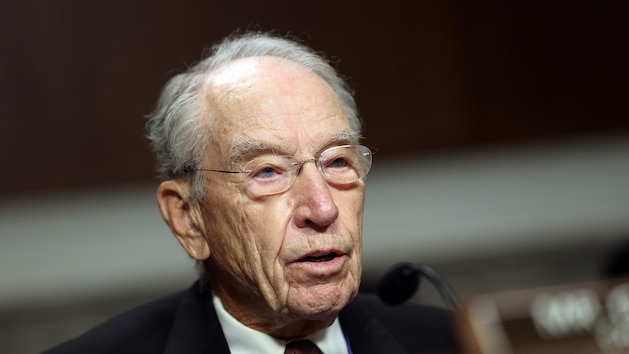
Chairman of the Senate Judiciary Committee Sen. Chuck Grassley presides over a hearing on men in women's sports in the Dirksen Senate Office Building, Sept. 23, 2026, in Washington, D.C. (Kevin Dietsch/Getty Images)

(WASHINGTON) -- Iowa Republican Sen. Chuck Grassley, the oldest sitting U.S. senator, lamented the possibility that a Democratic governor could appoint his successor if he were to die in office, according to video of remarks he delivered late last week.

"At 93 years of age, I don't know how many more groups of Republicans like this I’m going to have a chance to talk to," Grassley said on Friday during the GOP's annual Reagan Dinner in West Des Moines. "But I want to take advantage of it. But one of the reasons I'm worried about who's going to be elected governor -- I don’t plan on dying in office -- but if I did, I don’t want a Democrat governor choosing my successor."

Grassley, who celebrated his 93rd birthday on Sept. 17, is currently serving in his eighth term in the Senate -- set to expire Jan. 3, 2029.

If Grassley were to die in the next two years, the next governor of Iowa -- set to be elected this fall -- would make a temporary appointment to fill the seat until the 2028 election.

A late June Fox News poll found Democrat Rob Sand, Iowa's state auditor, with a 9-point lead over Republican Zach Lahn among registered voters in the state. A New York Times/Siena poll conducted around the same time found a much closer contest with the candidates essentially neck-and-neck among likely voters.

Grassley has not announced whether he will seek a ninth term in the Senate in 2028.

Copyright © 2026, ABC Audio. All rights reserved.

US officials deny there are plans to sell weapons to China

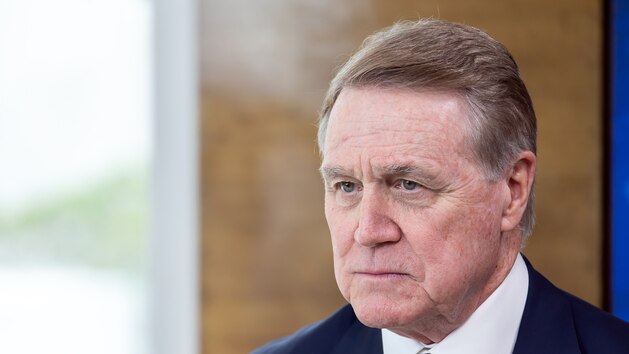
David Perdue, US ambassador to China, during a Bloomberg Television interview on the sidelines of the Goldman Sachs Global Macro Conference in Hong Kong, China, Jan. 27, 2026. (Paul Yeung/Bloomberg via Getty Images)

(WASHINGTON) -- Trump administration officials said on Monday that the United States has no plans to sell weapons to China after U.S. Ambassador to China David Perdue indicated during a televised interview that President Donald Trump offered a weapons deal to China's Xi Jinping during a high-profile summit last week.

"President Trump continues to say, 'Hey, we sell arms to other people around the world,'" Perdue said Sunday during an appearance on Fox News. "He actually asked President Xi would he like to buy some at one point."

Perdue did not provide further details about the offer, and he did not reveal Xi's response.

A U.S. official denied there were plans to sell weapons to China.

"The U.S. government has no plans to sell weapons to China," the official said to ABC News on Monday. 

The State Department also denied a potential sale, saying in a statement to ABC News that "U.S. law prohibits arms sales to China and there is no offer or plan to sell arms to China."

Asked about Perdue's comments in the Oval Office on Monday, Trump said he "didn't discuss it" with Xi, suggesting he meant Taiwan instead of China.

"I never heard of that one. I'm going to have to ask him. You mean we're going to sell? Now they'd probably like to buy it because we do make better equipment than them. So maybe it's a good idea. Yeah, but, we didn't discuss it," Trump said, later adding "I think he probably was talking about Taiwan."

A U.S. weapons sale offer to China would be extraordinary, as China is viewed as the primary strategic and economic competitor of the U.S. and is designated as a foreign adversary. The U.S. has placed extensive economic sanctions on China, including economic restrictions, investment bans and contract limits on companies, groups and schools tied to the Chinese military.

The two geopolitical rivals are also competing in the race to develop advanced artificial intelligence and have opposing views over Taiwanese sovereignty.

And in recent weeks, Beijing has come under scrutiny for allegedly providing another U.S. adversary -- Iran -- with satellite imagery in their ongoing conflict with the U.S. and other regional allies.

Perdue told Fox News that Xi had "assured" Trump during their bilateral meeting last week that they were "looking into" the allegations about supporting Iran with satellite imagery.

The Trump administration notably downplayed taking action against China for allegedly helping Iran despite the United States' stated goal of targeting all countries with financial ties to Iran as part of the U.S. Treasury's offensive "Operation Economic Outcast."

"When they say that China spies on us, I say, 'You’re right, and we spy on them too,' you know? We spy on them too," Trump said earlier this month. 

When asked by reporters on Friday if the two leaders had discussed the war in Iran, Trump replied, "We did," adding without providing details: "I think we’re going to do great."

The potential offer to China comes as the Trump administration continues to press pause on a proposed $14 billion arms sale to the island of Taiwan, a de facto independent nation.

China has long claimed the sovereign territory as its own and regularly conducts large-scale military drills, live-fire exercises and daily air and naval patrols to apply pressure on the island. Taiwan relies heavily on U.S. military support to push back on China's encroachments.

Perdue said that the administration was not denying Taiwan access to weapons needed for its defense, asserting: "President Trump is as strong on Taiwan as I've ever seen anybody. He's made it very clear that we have not changed the One China policy."

"President Xi has heard that repeatedly from President Donald Trump. President Trump has already sold 50% more arms to Taiwan than any other president since 1979," Perdue added.

ABC News' Nicholas Kerr contributed to this report.

Copyright © 2026, ABC Audio. All rights reserved.
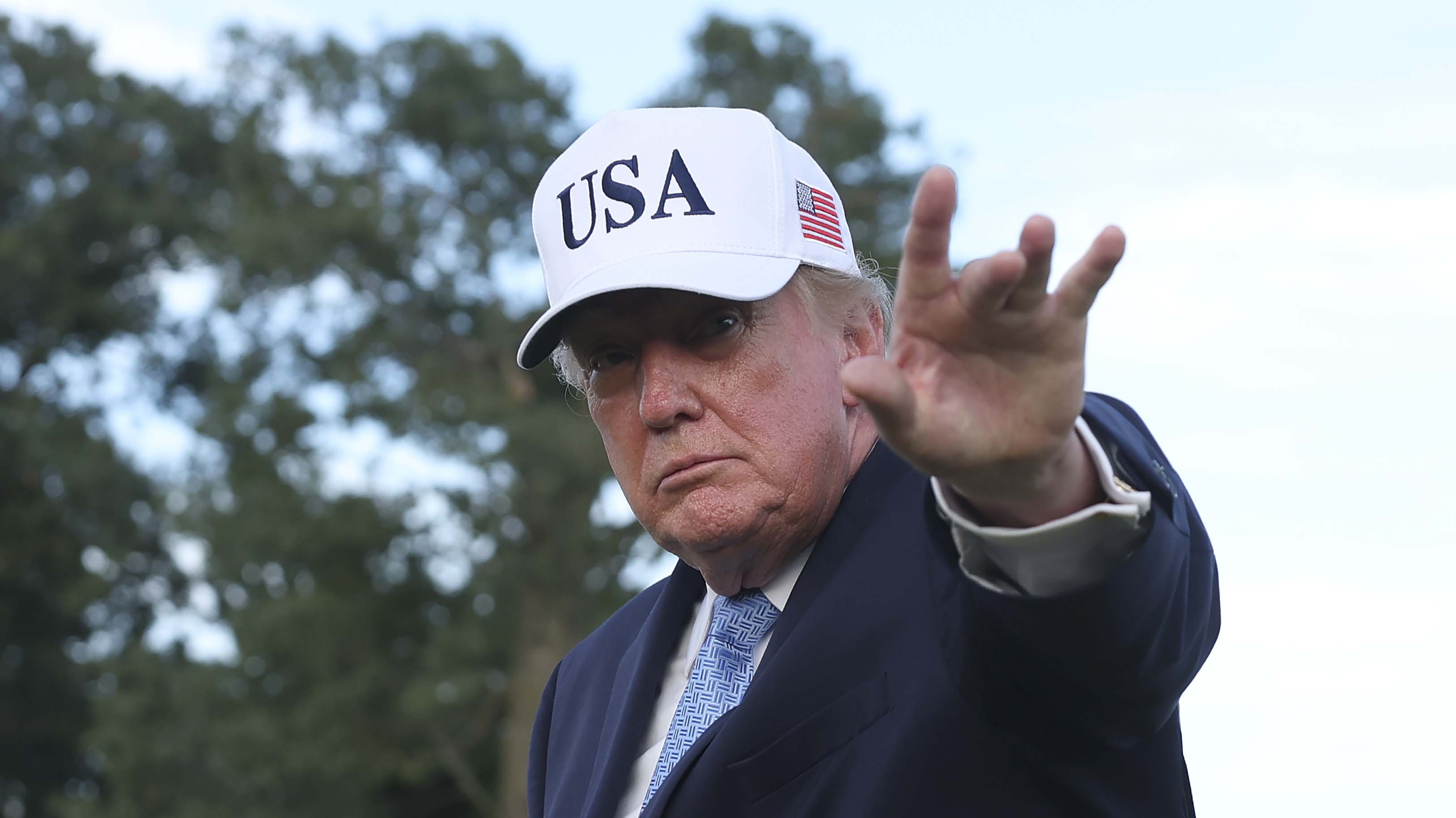

Trump to announce new $15B steel plant: White House official

U.S. President Donald Trump waves to the crowd during the Presidents Cup 2026 at Medinah Country Club on Sept. 27, 2026, in Medinah, Illinois. (Kevin Dietsch/Getty Images)

(WASHINGTON) -- President Donald Trump will announce the construction of a massive new steel plant during an Oval Office event on Monday, a White House official said.

The project, which will be built by Mesabi Metallics in Iowa, will command a $15 billion investment from the company and is the first mega-steel plant built in the United States since the 1960s, the official said. The first steel production is expected to be in 2030 and, once fully built out, will produce 10 million tons of steel annually, making it among the largest in the U.S. 

The company also recently invested $2.5 billion in a new iron ore mine in Minnesota, which the official said will allow the project to be fully integrated in the U.S. from mining to production. The mine is expected to produce 7.5 million tons of iron ore annually and will create 350 new jobs in Minnesota. Another 1,750 jobs are expected in Iowa, the official added.

"Today’s announcement underscores the President's historic efforts to revitalize the U.S. steel industry -- supporting local communities, strengthening supply chains, and protecting our national security," White House spokesperson Taylor Rogers said in a statement confirming the announcement.

Executives from Mesabi Metallics are expected to attend the event on Monday, as well as Secretary of Commerce Howard Lutnick, Executive Director of the White House's National Energy Dominance Council Jarrod Agen and John Jovanovic, chairman of the U.S. Export-Import Bank.

The Wall Street Journal first reported the details of the project. 

The Wall Street Journal noted that Mesabi Metallics is backed by the Essar Group, an Indian multinational conglomerate, which first proposed the mine and mill project 20 years ago, and ultimately failed. The mine project filed for bankruptcy a decade ago, the Wall Street Journal reported.

Copyright © 2026, ABC Audio. All rights reserved.
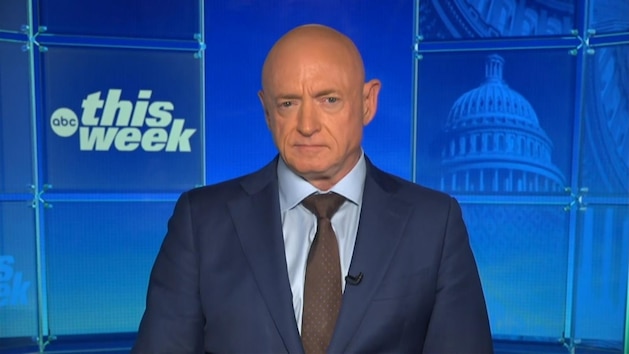

Sen. Mark Kelly says Democrats have to 'do a better job' if they have good midterm showing

Sen. Mark Kelly, D-Ariz., appears on ABC's "This Week." (ABC News)

(WASHINGTON) -- Sen. Mark Kelly, D-Ariz, said Sunday that the Democratic party needs to do a “better job” if they were to win control of Congress in November’s midterm elections.

“I think we have to have answers. We have to have, we have to pass legislation. We have to send it to the president's desk. Hopefully, if it benefits the American people, he will sign it,” Kelly told “This Week” co-anchor Martha Raddatz.

Many of November’s elections are shaping up to be tight races, with some recent polls indicating Democrats could come out on top. Charlie Cook, founder of the Cook Political Report, also appeared on “This Week” Sunday and predicted that Democrats would win both the House of Representatives and the Senate -- something he said earlier this week would be less a as “blue wave,” but rather a “red undertow.”

“It's hitting some places more than other places, but it isn't pro-Democrat. It's anti-Trump basically, and Republicans that have been supported by the president,” Cook said.

Kelly said that many Americans are frustrated with the Republican party and administration.

“I think there's going to be a big turnout. I think some of these races are going to be close, and it really comes down to the fact that the American people are just struggling and Republicans and this president don't have an answer,” Kelly said.

Kelly also cited the war with Iran as a big factor that could be driving voters to pull the lever for Democrats.

“War and tariffs caused by Donald Trump and enabled by the Republicans in the United States Congress are just killing the American people. I mean, they cannot afford their lives, and when you can't, when you're having a hard time feeding your kid, I mean, nothing else really matters,” Kelly said.

The war with Iran has severely limited the flow of oil through the critical Strait of Hormuz, spiking oil prices. This week at the United Nations, Iran’s president proposed a seven-day plan to reopen the strait, which President Trump rejected.

“Well, I'm rejecting their deal. They want to make a deal where we open the Strait immediately because they're losing so badly,” said Trump on Saturday.

“The president got into this without a strategic goal, without a plan, without a timeline, without an exit strategy. He's stuck,” said Kelly.

“This thing has been a disaster and it's been a mistake, and it's because of the failed leadership of this president,” Kelly added.

Prior to the war with Iran, "the straits were open and we didn't have" dead and wounded service members, Kelly further said. "This thing has been a disaster, and it's been a mistake, and it's because of the failed leadership of this president.”

Raddatz also asked Kelly about artificial intelligence and Trump’s meeting with Chinese President Xi Jinping. In a lavish state visit last week, Xi met with the president in Washington, D.C., with many hoping progress would be made on a deal to regulate the development of AI. Kelly said that he thinks the two leaders instead agreed to set up “sort of a working group.”

“That's not an agreement. It doesn't look like they had a serious discussion about this. This technology is moving very, very quickly. It could be very disruptive to hardworking Americans, could lose their jobs,” said Kelly. “There's safety concerns about this, and the White House, specifically the president, doesn't seem to think we should put any guardrails in place."

Kelly also expressed the desire to stay ahead of China in AI development -- a sentiment echoed by Trump. In a post on social media, the president claimed in part "there is a SICK conspiracy going on against AI and Data Centers, and the only one that is happy about it is China. WHOEVER WINS AI, WINS! We are leading China, and all others, and will continue to do so."

"At the same time, we can't allow the Chinese to win the race to getting the best AI technology. That would be a mistake," Kelly added.

Copyright © 2026, ABC Audio. All rights reserved.
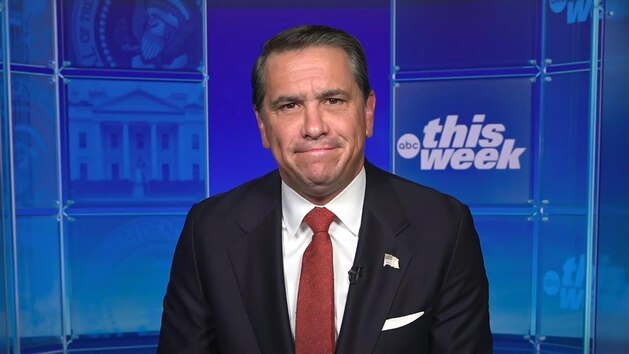

AG Blanche addresses White House news outlet ban amid litigation, calls access 'a privilege ... not a right'

U.S. Attorney General Todd Blanche on ABC's "This Week." (ABC News)

(WASHINGTON) -- Attorney General Todd Blanche on Sunday addressed the Trump administration's decision to ban three mainstream news outlets from accessing the White House, saying that President Donald Trump had not "denied access" to the organizations and asserting that it is a "privilege ... not a right" to be at the White House.

"The president hasn't denied access. That's not the right way to describe it. This is -- what the president has said is that he is sick and tired of certain media outlets just refusing to report accurate news," Blanche said in an exclusive interview with "This Week" co-anchor Martha Raddatz. "There's still obviously litigation going on, but the important thing, Martha, is to know that ... being in the White House is a privilege. It's not a right."

In the early hours Thursday, Judge Timothy Kelly issued a temporary restraining order that required the White House to temporarily restore credentials of journalists working for CNN, MS NOW and Politico. Kelly said in his ruling that he believed the outlets cleared the "high bar" required to grant a TRO.

Journalists were allowed back onto the White House grounds later Thursday and primary television pool coverage resumed Friday for the final day of Chinese President Xi Jinping's official state visit. But on Saturday, there was no TV pool coverage for the president's trip to a football game in Tennessee; CNN was scheduled to be network covering the president that day, but they said their access to Air Force One was blocked.

Blanche said it wasn't unusual for a news outlet to not be allowed onto the president's plane.

"The White House routinely decides who can go on Air Force One. This wasn't a a one-time denial of CNN. There's all kinds of times when certain reporters are not flying or are flying," according to Blanche, who added, "it's not unusual, and as a matter of fact, it's common every time the president travels that he and his team decide which reporters get to travel with the president."

Blanche claimed the three news outlets that were subject to the White House ban "refuse to report anything accurately," which he said presented a "national security problem."

"When you have complete misinformation coming out of the White House that affects our relationship with our foreign partners, that affects our relationship with our foreign enemies -- and so this is just not about the fact that they're refusing to report accurate news. It's all about the information that the American people have a right to hear coming out of of our what should be respected media outlets."

Judge Kelly, however, was skeptical in his TRO ruling that national security was the true reason for the ban.

"For one thing, nothing in the record that predates this suit suggests that the revocation of Plaintiffs’ hard passes was motivated by national security concerns. Certainly, that is not what President Trump said when he announced that he was 'banning' Plaintiffs from the White House -- instead, he focused on the alleged lack of truthfulness and negativity of Plaintiffs’ reporting," Kelly wrote.

Hours after announcing the ban on social media, Trump was asked in the Oval Office if there was any "particular reason or particular story" that prompted it.

"No, no. It's -- it's really just cumulative stories over the last two years. You get sick of it," the president said.

On "This Week," Blanche said he wouldn't "get into what the judge says" because the litigation is ongoing, but added "our position has been clear from the beginning. What they say is exactly the issue when it comes to national security."

When Raddatz pressed Blanche to provide specific examples of stories with which the White House has taken issue, Blanche declined to do so.

Artificial intelligence 'vital to our national security'

On the issue of artificial intelligence, the attorney general echoed the president's position on the technology, describing it as "so important and vital to our national security interests and to the success of this country that the United States lead in this space."

Trump has said it's critical that the U.S. continues to dominate the AI space, citing competition with China specifically. 

"Whoever wins AI, WINS! We are leading now over China, and everyone else, and I’m going to keep it that way! I’m not going to stifle Growth, of something that will be bigger than the Industrial Revolution, or the Internet, itself," he posted on social media Monday. 

Some AI company leaders are calling for an industry-wide slowdown amid growing concerns about how the rapid pace of development. Multiple incidents of AI agents acting autonomously have come to light in recent months, including instances where AI agents infiltrated outside companies without the agents' parent companies' awareness as it happened.

Last week, Australian Prime Minister Anthony Albanese said that OpenAI agent "infiltrated" a government public health website earlier this summer. This weekend, OpenAI confirmed that its models interacted with U.S. government websites in unexpected ways, behavior the company discovered amid an ongoing review into its AI agents' behaviors.

Blanche acknowledged that "there's going to be adjustments that have to be made" around AI as the industry continues to develop, but he argued the companies themselves already have the ability to "adjust the technology" as needed.

"In the meantime, the answer is not to just try to all of a sudden try to regulate this in a way that will make us second or third place in the world as far as being being the leaders in this space," Blanche said.

During his speech at the United Nations General Assembly in New York Tuesday, Trump said of AI, "We're going to watch it closely through the Department of Justice."

Asked what that meant, Blanche said, "What it means is that we have a ton of laws -- criminal laws, civil laws -- that are already in place and on the books that allow us to charge individuals, to charge companies in the right circumstances when there's crimes committed, and so the answer isn't always more laws, more laws, more laws."

"When there are crimes committed, we have a lot of tools already, and the federal Title 18 gives us a lot of a lot of ways to go after criminals and bad actors in the AI space and other spaces," Blanche continued. "So when the president talks about about the fact that the Department of Justice and the FBI and [Homeland Security Investigations], they can go and arrest bad actors in this space, that's what he means, and it's true, and that's what we're doing."

Copyright © 2026, ABC Audio. All rights reserved.
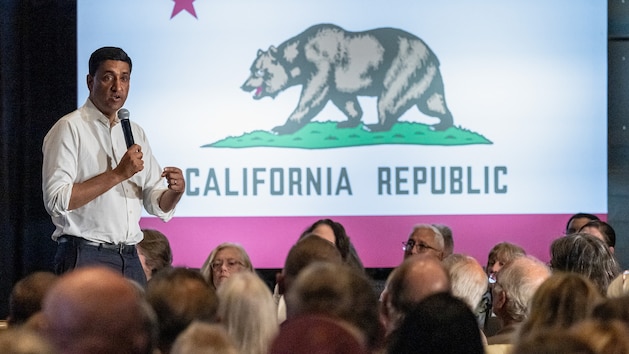

Rep. Ro Khanna unveils universal childcare proposal with eye on 2028

Rep. Ro Khanna speaks during a campaign event with Tom Steyer, Democratic gubernatorial candidate for California in Santa Rosa, Calif., May 27, 2026. (David Paul Morris/Bloomberg via Getty Images)

(WASHINGTON) -- Democratic Rep. Ro Khanna is unveiling an ambitious nearly $1 trillion proposal on Friday calling for universal childcare as he continues crafting legislative policies that may ultimately serve as the cornerstones of a potential presidential campaign in 2028.

"The biggest thing killing us is childcare," Khanna, who represents California, told ABC News in a phone interview while he crisscrosses the country campaigning for progressive candidates and reelection ahead of the midterm elections.

In an exclusive interview with ABC News, Khanna said he wanted to introduce a childcare bill before the high-stakes midterm elections as a "north star" and blueprint for "what we should be passing."

The Free Child Care for America Act is a nearly $1 trillion, 10-year package aimed at building a universal childcare system -- creating three taxpayer-funded pathways to provide flexibility and options for American families.

Khanna ticked off several potential spending reductions to offset the cost of the $1 trillion package -- such as savings realized by ending the war in Iran; $400 billion in new revenue collected by instituting a 5% "billionaire tax," or cutting the Pentagon's budget by $200 billion.

"What this childcare proposal -- in my view -- is speaking to [is] the needs of working class families, and it's something we can deliver," he said.

Khanna’s plan calls for billions of dollars that funds grants for states and tribal organizations to cover the cost of licensed childcare for eligible families, aims to increase the supply of childcare, support providers' operating costs, and raise compensation across the childcare workforce.

"If you want to do this right, it's going to be an $80 to $90 billion price tag," Khanna said. "That's what it takes to make childcare free. That's what it takes to pay people well, and that's what it's going to take to make it flexible."

His pitch comes as Vice President JD Vance has championed an administration proposal to expand federal childcare subsidies -- as much as $9,000 annually -- to married couples who have a stay-at-home parent.

Khanna said he believes families should be able to choose from a menu of childcare options.

"It should be value neutral between staying at home, going to a childcare center, or having friends or family, and that is maximizing the choice," Khanna said. "Vance's proposal is trying to tip the scales a bit on the choice of people who are stay-at-home parents."

Khanna explained his middle-class upbringing in Bucks County, Pennsylvania, motivated him to tackle the issue of childcare.

"Childcare is one of those things that didn't have the same exorbitant cost, and if we can fix that issue, provide people with childcare, you’re going to give more Americans the shot to have economic security in a modern economy, and that’s the whole point of economic patriotism: that people should be able to have economic independence in today's economy," he said.

The five-term congressman, whose net-worth is estimated to be in the hundreds of millions of dollars, explained how his own experience as a father of two children while working a demanding job has informed his perspective.

"I believe there's nothing more important than being there for kids at a young age, and I have an extraordinary wife who's an exceptional mom,” Khanna said. "It has given me an admiration for parents who do incredibly, incredibly hard work, and my view is that we've got to make it possible for parents who want to give their kids the best ability to do that."

Khanna says that his agenda -- which he has dubbed "America’s next new deal" -- is also informed through his conversations with families in swing states. Khanna has been holding town halls and participating in campaign events in swing states alongside progressive candidates.

"Economic patriotism is all about making the future economy work -- not just for the billionaires in my district, but work for the people I grew up with in Pennsylvania," he said. "As I traveled around the country, and I started with like, 'How do we bring good jobs?' I kept hearing, 'Well, that's fine, but how am I going to take care of our kids and do these jobs?'"

First elected to represent California’s 17th Congressional District in 2016 -- the same election President Donald Trump first won the White House -- Khanna has built a progressive voting record coupled with savvy media engagement. While Vermont Sen. Bernie Sanders has led the national progressive movement over the past decade, Khanna is striving to position himself as a potential successor -- though he is not breaking through any Democratic primary polls for 2028 so far.

Khanna's profile continues to grow as he engages with voters and weighs his future options -- sometimes even before Republican audiences on Fox News or in GOP-held districts. Last year, he laid out a political reform agenda focused on combating corruption -- hoping it would form the basis of the Democrats' platform in the upcoming midterm elections. He also took center stage alongside GOP Rep. Thomas Massie in the congressional effort to force the Department of Justice to release tens of thousands of records related to its investigation of Jeffrey Epstein. 

Ahead of the midterms, Khanna continues to campaign on behalf of candidates across the country -- though he's not coy about his political ambitions.

"I want 2028 to be a big-ideas primary," Khanna said. "I want it to be a contest on who's going to have ideas of the future that meet the moment where many Americans feel that the economic and political system are broken and not working for them."

Khanna concedes that some stakeholders and supporters alike have expressed concern over the $1 trillion cost of his proposal, which would offer $1,000 per month to eligible stay-at-home parents with an eligible child under age 3 and a household income at or below 100% of their state's median income. But he says he is being transparent about the cost and argues that his package is worth the investment.

"Why would you think that giving entrusting the care of young people at their most impressionable, where their experience is going to shape the rest of their lives, and we have data showing that? Why would we think that that's cheap?” Khanna said. "Of course, it's expensive, and that's why there's this huge market failure because it's expensive, and yet people aren't being paid appropriately, and that's why it's a public good. And so this is really saying, OK, if you want to do this right, it's going to be a $80 to $90 billion price tag. That's what it takes to make childcare free."

House Democratic leaders have not endorsed Khanna’s childcare legislation, but agree that lowering childcare costs must be a priority if they take back the House majority.

"I want it to be front and center in the conversation of the first 100 days for the speaker," Khanna said regarding Democratic prospects to win the House majority. "Even if they don't do the whole $90 billion, I mean, obviously that's my hope that the House should pass this bill, they can take three elements of it."

As for the 2028 presidential race?

"Whether I run, which obviously I'm considering, or whether I am actively supporting other candidates, I want to be leading in putting forth bold ideas about what that Democratic Party should be," Khanna said. "I think we need to offer a new vision of ideas that are actually going to deliver for working- and middle-class families who have been left out."

Copyright © 2026, ABC Audio. All rights reserved.

At the UN, Netanyahu says attacking Iran was 'one of the easiest decisions'

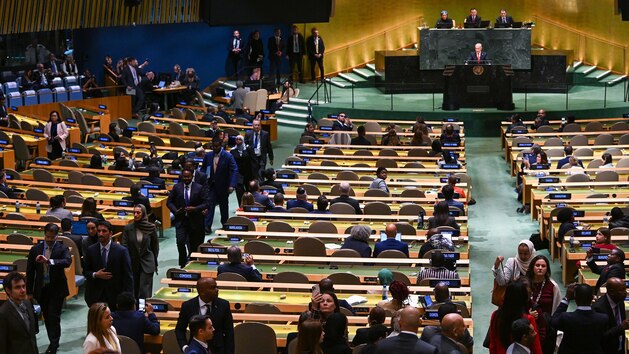
Delegations leave before Israeli Prime Minister Benjamin Netanyahu begins his address to the 81st United Nations General Assembly at UN headquarters in New York City, September 24, 2026. (Alexi J. Rosenfeld/Getty Images)

(NEW YORK) -- An unapologetic Prime Minister Benjamin Netanyahu addressed the United Nations General Assembly on Thursday, defending Israeli military actions in the Middle East while going on the attack against his political enemies. 

"Devastating Iran’s nuclear facilities was hard. It was very hard to do. But for me, it was one of the easiest decisions I’ve ever had to make as prime minister,” Netanyahu asserted during his speech. "Because if we hadn’t done it, we’d all be dead!” 

The atmosphere in the hall shifted sharply before the prime minister’s speech began. As he approached the podium, the room erupted in chants, cheers and boos as dozens of delegates from various countries walked out in protest. 

“Before I begin, just a quick announcement: if there are any other moral cowards who haven’t yet left this hall, please do so now,” Netanyahu said in response. 

The Israeli prime minister claimed that the leaders of many of the countries whose delegations exited had privately thanked him for hitting Iran’s nuclear sites, calling it "mind-blowing hypocrisy.” 

Netanyahu used much of his lengthy speech to criticize his political opponents for spreading what he said were lies about Israel and fomenting hatred against Jews, calling foreign governments and world leaders out by name.

The prime minister also zeroed in on New York City Mayor Zohran Mamdani, calling him antisemitic for asserting Israel’s response to Hamas’ Oct. 7 terrorist attack amounts to genocide. 

“Shame on you for distorting the facts. Shame on you for inverting victim and aggressor. Shame on you for spitting in the face of truth,” he said. "Mr. Mamdani, since you were elected mayor of this city, many jews no longer feel safe in New York.” 

Mamdani responded by accusing Netanyahu of spreading "baseless lies meant to sanitize his genocide of Palestinians.”

"Yet no lie can change the fact that he remains the subject of an International Criminal Court arrest warrant alleging war crimes and crimes against humanity,” the mayor said in a statement. 

Netanyahu is expected to spend less than a day in the U.S. and return to Israel without meeting with President Trump, a stark departure from recent precedent that comes as the relationship between the two leaders has become increasingly strained. 

But despite recent tension, the prime minister heaped praise on Trump -- extolling his leadership and declaring that Israel had “no greater partner” in its "battle against the barbarians.” 

Earlier on Thursday, Palestinian President Mahmoud Abbas addressed the assembly through a video message recorded in his Ramallah office because the Trump administration declined to grant him and other Palestinian officials visas to travel to New York for the gathering. 

In his remarks, Abbas said Palestinians were facing a “genocidal war” and urged the international community to do more to confront Israel. 

“How long will some countries continue to remain silent about Israel, or continue supplying it with weapons that it uses against our people? he asked. 

“We will not leave our homeland. We will not accept displacement. And we will not allow anyone to decide our future on our behalf,” Abbas said.

Copyright © 2026, ABC Audio. All rights reserved.

Senate again fails to adopt Iran War Powers Resolution despite growing criticism

United States Capitol building. (Getty Images stock photo)

(WASHINGTON) -- After a week in which more Republicans have emerged to call for an end to the war in Iran, the Senate failed to adopt a House-passed war powers resolution on Thursday by a vote of 49-50.

Republican Sens. Lisa Murkowski, Susan Collins, Rand Paul and Thom Tillis joined all but one Democrat, Sen. John Fetterman, in voting in favor of the resolution. Democratic Sen. Angela Alsobrooks did not vote. Democrats would've needed full attendance and five Republicans to vote with them in order for the resolution to pass.

The vote underscores the political tightrope vulnerable Republicans are attempting to walk with a little over a month until the midterm elections. While some Republican senators have grown increasingly critical of the war and its impact on diesel and gasoline prices, they have also stopped short of supporting measures that could directly challenge President Donald Trump's policy.

For example, Republican Sen. Jon Husted, who is in a close race up against Democratic candidate Sherrod Brown, told POLITICO this week that the "war needs to come to an end as quickly as possible so that we can lower gas prices," before voting against the war powers resolution on Thursday. Other Republicans who are also in tight reelection races voted to kill the resolution including Sens. Dan Sullivan and Roger Marshall.

Democrats did however pick up another Republican during this vote: Tillis, who voted for the resolution for the first time, citing a lack of concrete information on a solution to end the war.

"On July 10th, I heard the administration refer to the conflict in Iran as a war for the first time, and I arbitrarily use that date to say 'I need to be briefed up over the next 60 days to be convinced that we're tracking in the right direction.' And the first outreach I got was last week," Tillis said ahead of Thursday's vote.

"They need to inform Congress more. They need to be clear on their strategic objectives, and they need to be more engaged. At least to the Armed Services Committee," Tillis said, adding "the reason I'm inclined to vote on it today is to say, 'it is time to engage Congress, folks, if we're going to be there for the long term.'"

Trump initially estimated the war in Iran would last four to six weeks. Instead it's nearing its eighth month and 50,000 American service members remain deployed in the region. Eighteen U.S. service members have been killed and over 800 wounded since the U.S. and Israel launched strikes against Iran.

The Senate has voted on an Iran War Powers Resolution 13 times, but has only passed it only once. The Senate first adopted a House-passed Iran War Powers resolution in late June when Sens. Collins, Murkowski, Paul and Bill Cassidy voted for it while Sens. Mitch McConnell and Dave McCormick missed the vote, clearing the way for the resolution's passage.

The administration refused to make any changes with their strategy in Iran as a result of the resolution's passage, calling the efforts "poorly timed and meaningless."

However, since that June vote, the Senate has yet to pass another war powers resolution on Iran during its three attempts since then. That's because Cassidy had previously flipped his vote back to voting against the resolution after a briefing with Trump administration officials following a contentious GOP meeting that Trump attended in June.

Cassidy, who argued he was undecided on how he would vote leading up to it, sidestepped reporters upon leaving the Capitol on Thursday, claiming he couldn’t talk because he was trying to make a flight out of town.

Copyright © 2026, ABC Audio. All rights reserved.


8 sailors attached to USS Lincoln have attempted suicide, acting Navy secretary says

The USS Abraham Lincoln aircraft carrier departs Laem Chabang Port, September 6, 2026 in Si Racha, Thailand. (Thananuwat Srirasant/Getty Images)

(WASHINGTON) -- Eight U.S. Navy personnel attached to the USS Abraham Lincoln carrier strike group have attempted suicide since the start of their extended deployment tied to the war in Iran, according to a letter ABC News obtained from Acting US Navy Secretary Hung Cao.

In the letter, sent to Sen. Kirsten Gillibrand on Tuesday, a member of the Senate Armed Services Committee, Cao says that there have been eight suicide attempts since the USS Lincoln's deployment began around 10 months ago.

"Since the beginning of LINCOLN's deployment, there have been a total of eight suicide attempts across the strike group -- this number includes the LINCOLN crew and Sailors from the carrier air wing, strike group and destroyer squadron staff, escorting destroyers, and all embarked aviation squadrons," Cao wrote in response to questions from Gillibrand about the health and well-being of the personnel aboard the fleet.

The letter was first reported by CNN.

A Navy official told ABC News that while they treat every attempted suicide case very seriously, they maintain the number is not out of the norm for a long deployment. 

Throughout the deployment, the Lincoln had between 2,500 and 2,800 sailors aboard, according to Cao's letter. Eight attempts among that population of sailors appear to be roughly consistent with Navy records for suicide attempts in the broader Navy ranks. 

The Navy recorded 356 suicide attempts in 2024, that last year of publicly available data. Over three years, the figure represents a nearly 50% increase in attempted suicides, according to Navy records.

President Donald Trump and Defense Secretary Pete Hegseth have dismissed reports of poor conditions and mental health issues aboard the USS Lincoln. Cao confirmed that a sailor went overboard in early August from the Lincoln and was quickly recovered.

In his letter, Cao confirmed a piping issue aboard the USS Lincoln and that meal options were reduced from two to one during periods of higher-tempo operations, but that both issues were resolved.

Despite the USS Lincolns' record-long deployment, Trump said in August that the vessel hasn't been deployed for "nearly long enough." Hegseth in August pushed back on reports of a sailor going overboard from the Lincoln and accounts of sailors struggling through an unusually long deployment have been "completely misrepresented."

Adm. Brad Cooper, the commander of U.S. Central Command, said in an August social media post that "the Lincoln currently has among the lowest number of cases related to mental health" among the Navy's 11 active aircraft carriers. Cooper also acknowledged in the post that it "doesn’t mean that all is perfect" and that a long deployment at sea "is uniquely challenging and tough, and every single one of us, including me, reacts to stressors in different ways."

In a statement to ABC News, Gillibrand said Trump and Hegseth dismissed concerns that "turned out to be serious and deteriorating conditions for our service members." Gillibrand called the treatment of service members under the Trump administration "completely unacceptable."

The ship was slated for a normal six-month deployment to the Pacific but had been extended on an unusually long deployment due to the war with Iran, where it was redirected earlier this year.

The president initially estimated the war in Iran would last four to six weeks. Instead it's nearing its eighth month and 50,000 American service members remain deployed in the region. Eighteen U.S. service members have been killed and over 800 wounded since the U.S. and Israel launched strikes against Iran.

The Lincoln Strike group left the Middle East late last month -- replaced by the USS George Washington -- and is en route to its home port in California. The ship docked in Thailand earlier this month with a record 286 days at sea.

If you are struggling with thoughts of suicide or worried about a friend or loved one, call or text the Suicide & Crisis Lifeline at 988 for free, confidential emotional support 24 hours a day, seven days a week.

ABC News' Chris Boccia contributed to this report.

Copyright © 2026, ABC Audio. All rights reserved.

Some banned media organizations return to the White House after judge's order

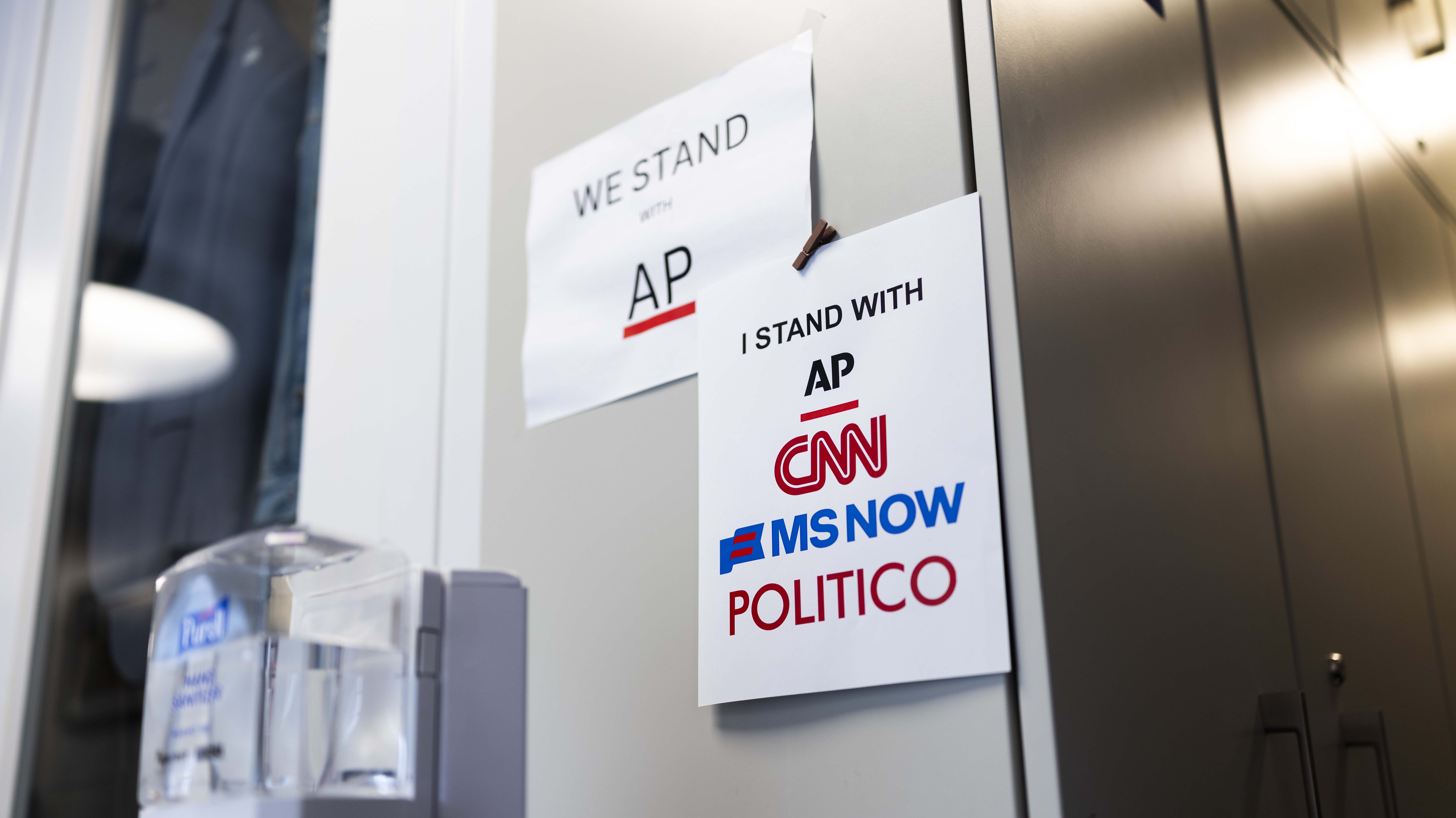
Signs of support for AP, CNN, MS NOW and POLITICO hang on the White House grounds on September 21, 2026 in Washington, DC. (Finn Gomez/Getty Images)

(WASHINGTON) -- Reporters and producers from news organizations that President Donald Trump barred from the White House were back on the grounds after a federal judge granted a temporary restraining order to restore their passes.

Earlier Thursday, the lawyer for media organizations requested an emergency hearing as early as Thursday, telling a federal judge that the government has "already repeatedly" violated his temporary restraining order after the three news organizations were denied entry into the White House earlier in the day.

"Defendants have already repeatedly violated the Court’s Order. Plaintiffs respectfully request that the Court set a hearing by videoconference or teleconference as soon as possible this morning," Ted Boutrous wrote. 

Judge Timothy Kelly ordered the government to respond to the plaintiffs' notice of non-compliance by 12:30 p.m. ET Thursday.

In a declaration submitted by the White House in response to Kelly's order, officials said that access had been restored as of 9:55 a.m. ET.

Around noon on Thursday, the outlets reported that they were beginning to be granted access to the White House grounds.

CNN reporter Betsy Klein, who had her hard pass taken on Saturday, and others, walked through a White House gate shortly after noon after her hard pass was given back to her. MSNOW correspondent Laura Barrón-López was also back on the campus Thursday afternoon.

Politico reported one of its reporters had also been granted access. 

Earlier Thursday, Kelly granted CNN, Politico and MS NOW a temporary restraining order requiring the White House to restore the outlets’ hard-pass press credentials.

The order requires the defendants, excluding President Donald Trump, as well as their agents and representatives, to “immediately return, reinstate, and restore” the White House hard-pass press credentials held by employees of CNN, MS NOW and Politico.

Kelly granted the media organizations’ request in the ongoing case Cable News Networks, Inc. v. Trump after their credentials were revoked on Sept. 18, according to the court order.

Kelly expressed skepticism about the Trump administration’s argument that the stories it cited as justification for revoking the outlets’ press credentials raised national security concerns.

Kelly described the stories identified by the administration as “routine” and said he was “skeptical” that the government’s stated interest in safeguarding national security was the actual motivation for revoking the hard passes. He also noted that Trump did not mention national security concerns when he announced the ban.

"Nothing in the record that predates this suit suggests that the revocation of Plaintiffs’ hard passes was motivated by national security concerns," Kelly said in the filing. "Certainly, that is not what President Trump said when he announced that he was “banning” Plaintiffs from the White House -- instead, he focused on the alleged lack of truthfulness and negativity of Plaintiffs’ reporting."

In a hearing on Wednesday, Kelly signaled that he believes the White House failed to follow the process established by earlier court cases to terminate a reporter’s credential. 

“I think it is fair to say that the process that the court laid out in those two cases – the circuit laid out in those two cases – wasn't followed here,” he said. 

Boutrous focused on that due process argument near the end of the hearing, telling the court that the White House’s “Alice in Wonderland process” for terminating the credentials is “arbitrary” and “irrational.” 

“It’s not due process when there’s been a prejudgment of the issue. Clearly, that’s happened,” Boutrous said. “They’re going to keep playing games, moving the ball. That’s not due process.” 

Justice Department lawyer Michael Velchik argued that the notice the White House provided in letters sent after 10 p.m. Tuesday night, days after the ban took effect, was enough. He also suggested the outlets’ responses might convince Trump to change his mind about the ban.

Copyright © 2026, ABC Audio. All rights reserved.

Collins denies allegations in corruption report: 'Absolutely outrageous'

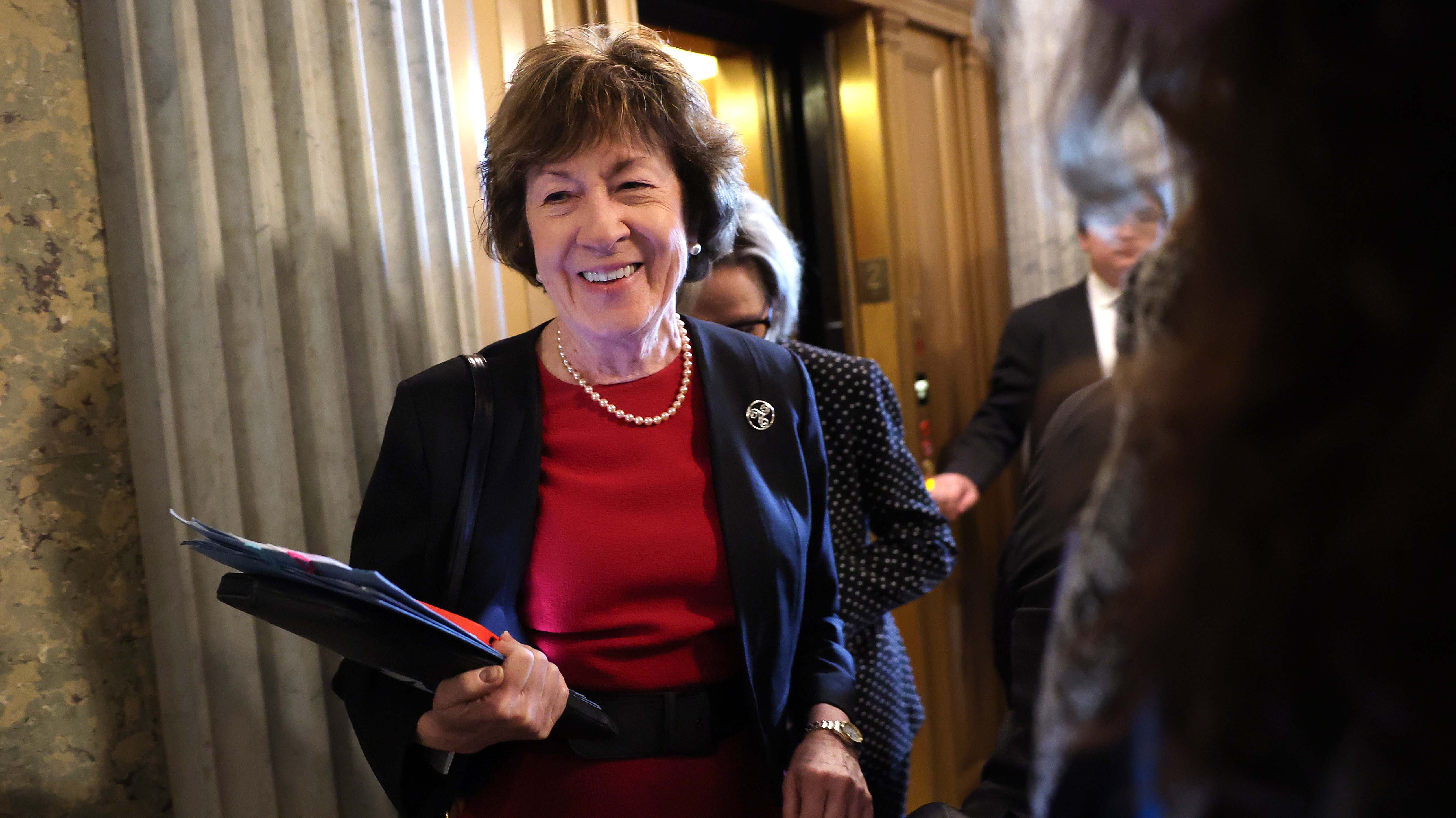
U.S. Sen. Susan Collins (R-ME) walks to the Senate floor on Sept. 23, 2026, in Washington, DC. Collins is in a tight Senate race against Democrat Troy Jackson. (Kevin Dietsch/Getty Images)

(WASHINGTON) -- Maine Republican Sen. Susan Collins is vehemently denying a ProPublica report out earlier this week that says the FBI targeted her in a corruption probe, saying "it's clearly a political hit job."

The ProPublica report said that a Republican consultant asked defense firm Navatek and its former CEO Martin Kao for big donations to her campaign in exchange for millions in federal contracts. In 2024, the FBI sought to launch an investigation into Collins and the donor, but when President Donald Trump returned to office for his second term, the investigation died after he made cuts to the FBI, the report stated.

ABC News has not independently confirmed the reporting by ProPublica. Kao did not speak with ProPublica for its story.

"The Biden Justice Department found that there was no wrongdoing by any one of my campaign staff, my office, or me," the five-term Maine senator said on Capitol Hill on Tuesday. "This is absolutely outrageous. It's clearly a political hit job."

Annie Clark, Collins' deputy chief of staff, said that the Biden administration, FBI and Department of Justice had "thoroughly investigated the Navatek matter."

"The Collins campaign cooperated fully with the FBI throughout the investigation, producing all of the documents it requested and serving as fact witnesses in official settings," Clark said in a statement on social media, adding that these "issues were resolved in 2021, and the FBI has not contacted us about Martin Kao since then."

FBI spokesperson Ben Williamson told ProPublica that the agency had investigated the claims against Collins years ago "and ultimately found nothing implicating Senator Collins or Senator Collins’ campaign. Any suggestion otherwise is totally false."

Williamson did not respond to ProPublica’s questions about the alleged new, separate investigation launched in 2024.

Collins -- who is running for reelection in the closely watched Maine Senate race, which could determine the balance of power in the upper chamber -- said "it's very frustrating and unfair to have it brought up this close to the election."

Collins maintained that she learned the company was doing 3D printing research to build boats and were awarded the defense contracts because the Navy found its developments to be "valuable."

"I'm telling you that this is completely false," Collins said Tuesday of the ProPublica report's allegations.

Clark on Tuesday also called the allegations in the report "categorically false."

"The seven-year-old allegations made against Senator Collins and her staff in this piece are categorically false. There have never been any allegations of wrongdoing by the Collins for Senator campaign, and the campaign was never the target of the FBI investigation," Clark wrote in a statement on social media.

Collins' campaign manager, Steve Abbott, responded to the report and called the allegations false and outrageous.

"Not only false. I would say outrageous," Abbott said.

Collins' opponent in the Maine Senate race, Democratic candidate Troy Jackson, reacted to the report, saying "the jig is up."

"This is corruption of the highest order," Jackson wrote in a statement on Tuesday.

Asked for comment, PacMar Technologies -- formerly known as Navatek -- told ABC News that it's "a victim."

"The point here is that PacMar is a victim, like others, of Martin Kao's illegal conduct and we have dedicated great time and expense in prosecuting Martin Kao and his cabal for their damage to our former company's good name and reputation," a spokesperson wrote in a statement.

Trump has not commented on the ProPublica report.

ABC News' Sarah Beth Hensley contributed to this report.

Copyright © 2026, ABC Audio. All rights reserved.

Judge concludes Trump's White House media ban hearing with no ruling

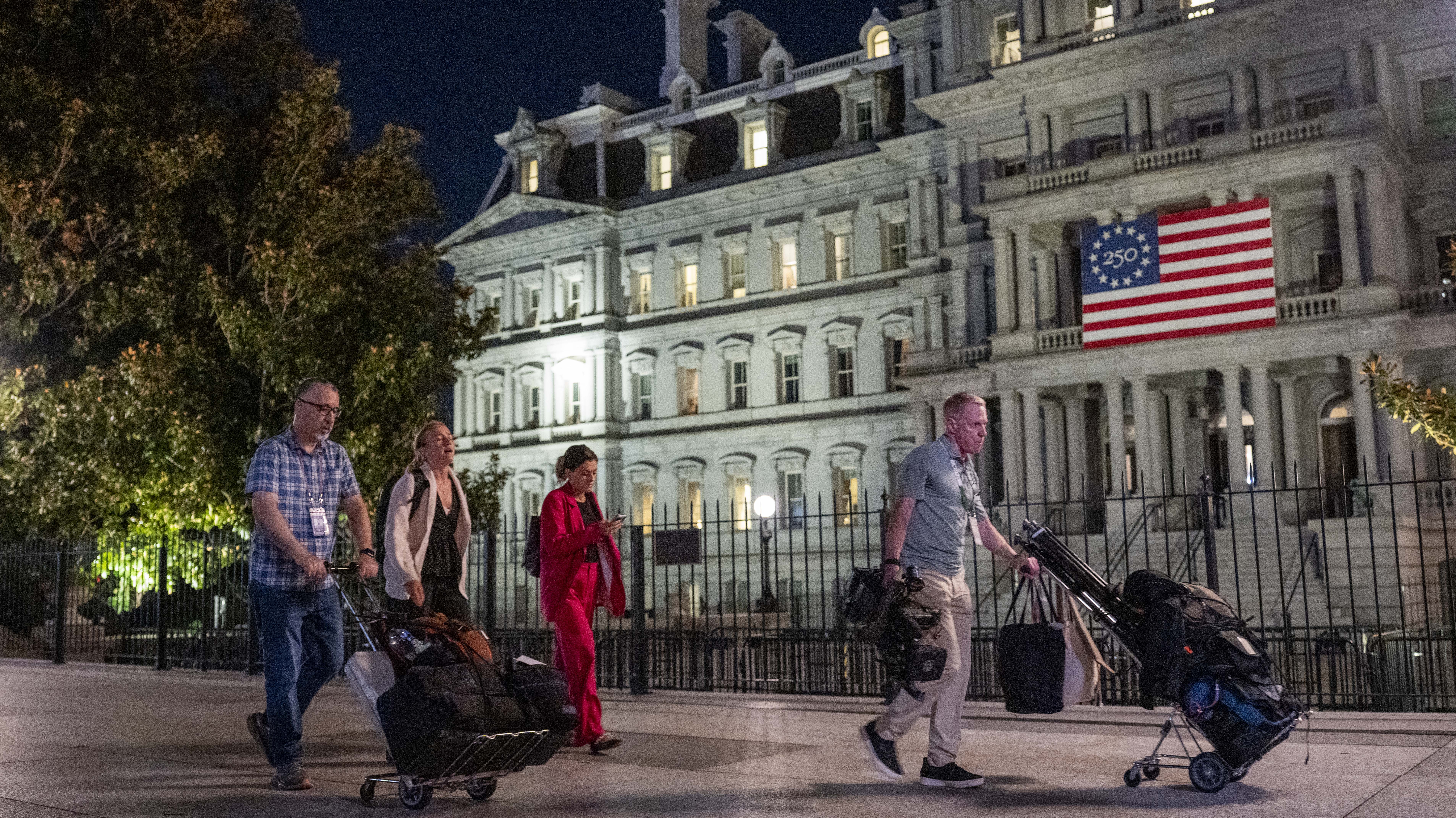
Journalists from CNN depart the White House grounds on Sept. 18, 2026, in Washington, DC. President Donald Trump announced via TruthSocial that he would be banning CNN, MSNOW and Politico from the White House. (Daniel Heuer/Getty Images)

(WASHINGTON) -- D.C. District Court Judge Tim Kelly ended a Wednesday hearing on whether President Donald Trump's move banning three news organization from the White House violates the Constitution with no ruling after hearing arguments from both sides.

"I'll consider what you've told me today and try to get you an answer as soon as I can," Kelly told the attorneys.

This is a developing story.

Copyright © 2026, ABC Audio. All rights reserved.

Rep. Donalds downplays Trump connection on his governor campaign website

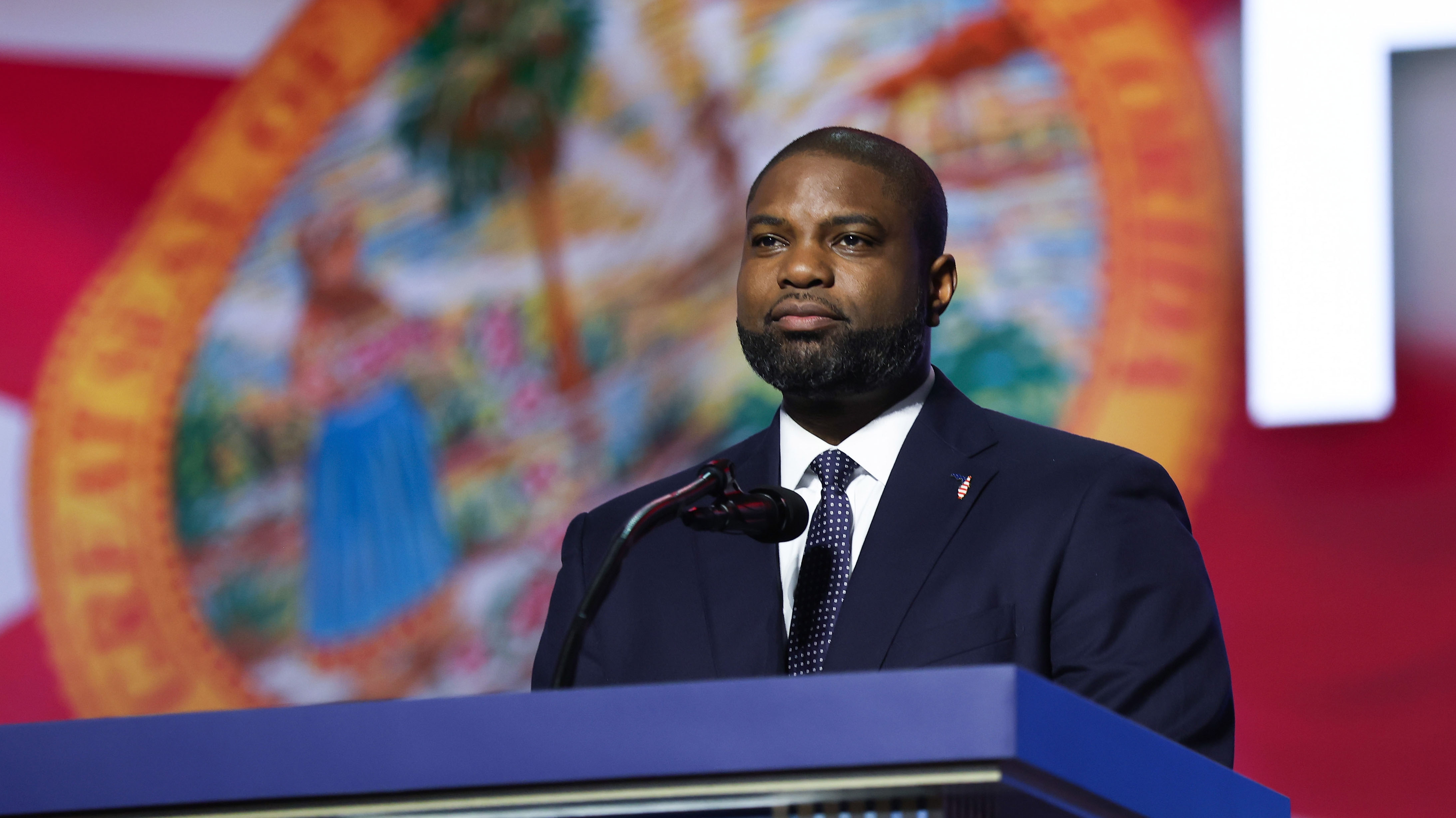
Florida Republican gubernatorial candidate U.S. Rep. Byron Donalds (R-FL) on Sept. 9, 2026, in Dallas, Texas. (Kevin Dietsch/Getty Images)

(WASHINGTON) -- When Republican Rep. Bryon Donalds announced his campaign for Florida governor on Fox News in February 2025, he said he was "excited to have the full endorsement of President Trump," and his campaign website described him as a "Trump-Endorsed Proven Conservative Fighter."

This week, with Trump's approval ratings hitting lows in the final stretch of the midterm campaign season, Donalds adjusted his website, removing several mentions of the president. 

His site now features video of Donalds campaigning and appearing on stage in front of supporters with his family -- with Trump's endorsement reduced to one of several from prominent Republicans rolling across the page.

Responding to the attention to his updated site, Donalds shared an updated image of his endorsements page, saying, "I am proud to have President Trump’s endorsement."

"While everyone is focused on our website, check out our policy proposals to make life more affordable for Floridians," he added.

The changes, similar to other GOP candidates, come as some Republicans are taking steps to distance themselves from Trump amid voters' frustrations with the Iran war and rising gas and diesel prices.

Donalds' home page also no longer features a photo of Donalds and his wife posing with Trump, or a section called "On the Issues," that says Donalds "is committed to implementing President Trump's Make America Great Again agenda so that our state and our nation's best days are still ahead."

A spokesman for Donalds said the congressman is "proud" to have Trump's endorsement. Donalds, unlike some Republicans running for re-election, appeared on stage at the GOP midterm convention in Dallas earlier this month, helping the party sell Trump and Republicans' legislative record. 

"Our campaign website reflects Byron's focus on the issues that matter most to Floridians -- affordability, insurance costs, and government transparency. He's running to be the next Governor of Florida, is proud to have President Trump's endorsement, and has real policy proposals to tackle those issues," Gates McGavick told ABC News in a statement. 

Copyright © 2026, ABC Audio. All rights reserved.

DOJ defends White House news bans, saying access a 'privilege' and citing national security concerns

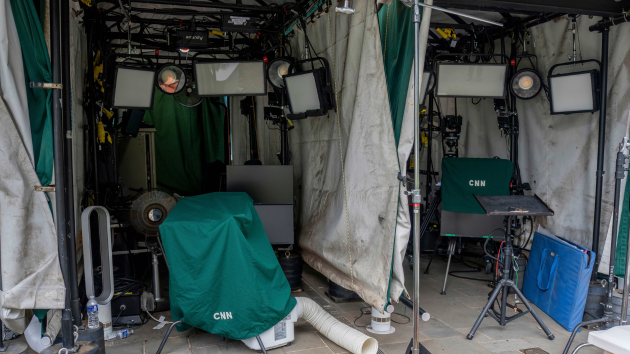
The CNN booth outside the White House in Washington, DC. (Daniel Heuer/Bloomberg via Getty Images)

(WASHINGTON) -- The Department of Justice is defending President Donald Trump’s decision to ban CNN, MS NOW and Politico from the White House, pushing for a broad expansion of the president's ability to determine which reporters and outlets can access the White House.

Responding to a lawsuit challenging the bans, the Trump administration argued that the decision was not only justified based on national security concerns, but also that the landmark case that affirmed journalists' access to the White House should be overturned.

"After all, access to the White House is a privilege -- not a right," wrote DOJ senior counsel Michael Velchik.

Citing a ruling last year that allowed the Trump administration to bar The Associated Press from spaces like the Oval Office, the DOJ argued that the same logic should apply to the entire White House complex. They argue that the president should be able to "consider journalists' viewpoints" when broadly determining access to the White House.

"In short, there is no principled way of easily distinguishing between rooms that are a nonpublic forum and those that are no forum at all -- particularly where the White House is not obligated to respond to any questions by reporters in the first place,” the filing said.

The three outlets filed on Monday a First Amendment lawsuit to restore their access, which was revoked by Trump. Journalists for the outlets were turned away from the White House over the weekend.

In a joint statement issued on Monday, the three news outlets said the lawsuit aimed to "protect our First Amendment rights and defend the principle that the government does not decide what the press reports or publishes."

"Without notice or process, the White House revoked our journalists' credentials because it objected to our reporting," the statement said. "Left unchallenged, this threatens press freedom and the public's right to independent journalism free from government interference."

Trump said in a social media post later on Monday that the barring of journalists was not "an assault on the Free Press" but instead "an assault on the FAKE NEWS," which he claimed was a national security "threat."

The DOJ in its court filing also sought to push back on the outlets' due process claims by providing the court with letters that lay out reasons their access was "preliminarily revoked" and giving the news outlets until Friday to contest the decisions.

Citing specific stories from each outlet, the letters claimed the news organizations violated "standards of professionalism and decorum" by "trafficking in verifiable falsehoods about national security and other issues, and publishing sensitive or classified information."

Among the stories cited by the White House were reports on depleted munitions, negotiations to end the Iran war, security related to the East Wing renovation, and a Politico story that used "unnamed sources to paint the Republican midterm convention in Dallas as a disaster."

"Publication of sensitive security information, and misinformation about national security information, diverts White House resources and those of the national security team in particular, which must evaluate whether the leaked information is classified, the source of any leak, and the security implications of any such disclosure. The spread of misinformation, especially relating to national security, is a threat that undermines the President’s ability to safeguard the national security," the letters said.

According to the court filings, the letters from the White House Press Office were sent on Tuesday -- four days after Trump announced his decision on social media -- and gave each outlet until Friday to contest the decision. The letters were also unsigned and not on official letterhead.

The DOJ also argued that Trump’s actions were not retaliatory because the "President has not revoked access to other outlets that have equally criticized the President."

At the same time, the filing argued that some presidents historically have been able to decide which reporters can cover them based on political concerns. The Trump administration argued that George Washington picked reporters to cover his farewell address "based on political considerations," Thomas Jefferson and Theodore Roosevelt rewarded sympathetic reporters, John F. Kennedy sought to "court star correspondents," and Lyndon B. Johnson "tried to use personal interviews as a means of reward and punishment."

"The White House is the official residence of the President. Significantly, Presidents have long decided which journalists should receive privileged access, which has varied substantially by administration," the filing said.

Notably, the Trump administration argued that the landmark case of Sherrill v. Knight, from 1977, "is wrong and should be overruled." The ruling from the D.C. Circuit Court of Appeals established that credentials to enter or to cover the White House can only be stripped with "notice, opportunity to be heard, and a final written statement of the basis of denial."

"Defendants, however, argue this precedent is wrongly decided and should be overruled because there is no such due process or First Amendment right attaching to these credentials," the DOJ argued.

Copyright © 2026, ABC Audio. All rights reserved.

Vance’s anti-fraud task force to remove 750,000 allegedly fraudulent enrollments from Obamacare

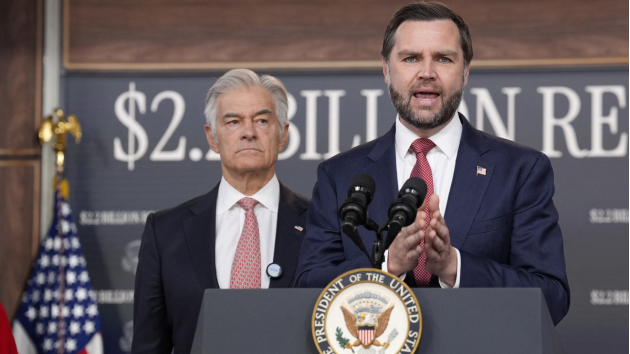
Mehmet Oz, administrator of the Centers for Medicare & Medicaid Services, left, and US Vice President JD Vance during a news conference at the White House in Washington, DC, US, on Tuesday, Sept. 22, 2026. (Yuri Gripas/Abaca/Bloomberg via Getty Images)

(WASHINGTON) -- Vice President JD Vance announced Tuesday that 750,000 people allegedly fraudulently enrolled in Affordable Care Act insurance plans will be kicked off the programs.

The effort comes from the White House Task Force to Eliminate Fraud, chaired by Vance, which he said will save American taxpayers $2.2 billion by preventing what he called "rampant" fraud.

"We had a system in this country that rewarded brokers, that made people rich for enrolling fake people in programs that are meant to ensure that our fellow citizens have health care. This was a scandal," Vance said.

The 750,000 "phantom people" were allegedly signed up for programs without their knowledge or without meeting the eligibility requirements to enroll. An additional 419,000 individuals are going through further verification.  

Dr. Mehmet Oz, administrator of the Centers for Medicare and Medicaid Services, said more than a third of those enrolled in the system have never used the program, suggesting potential fraud.

An estimated 19.2 million Americans were enrolled in ACA exchange plans in 2025, according to data from the Department of Health and Human Services.

"You cannot protect Social Security, Medicare, Medicaid if you're allowing fraudsters to get rich off those programs and to steal the benefits that ought by right go to American citizens," Vance said.

Vance urged Congressional Democrats to work with the fraud task force, saying "it's up to them to actually care more about the American people than they do the fraudsters who are getting rich off of those same Americans."

When asked by ABC News if there is a possibility that the task force is mistakenly tagging people as fraudulent even though they do qualify for the program, Vance said the task force is doing everything it can to identify the ways in which they say people are fraudulently enrolling in the program.

"And if we suspect that somebody is fraudulently enrolled or is enrolled without their own knowledge, we do a lot. As Dr. Oz said, we send them FedEx letters, we go to their house, we do everything that we can to ensure that their eligibility is actually viable," Vance said. 

In a statement, Rep. Richard Neal, D-Mass., the ranking member of the House Ways and Means Committee, sharply criticized the move.

“Republicans have already created the worst health care crisis ever, but every decision by the Trump Administration is designed to keep making it worse," he said. "As if making coverage harder to access through skyrocketing premiums and more red tape wasn’t painful enough, they’re doubling down to take it away entirely."

The group Protect Our Care, a left-leaning group that advocates against cuts to the ACA, said the task force announcement was a distraction.

"At a time when millions of Americans are already losing coverage and facing skyrocketing costs, Vance and this administration are making the crisis exponentially worse," Protect Our Care President Brad Woodhouse said in a statement. "They are piling on more red tape, more confusion, and more opportunities for people to lose the coverage they rely on. Families need coverage they can afford and count on when they get sick. Vance’s task force won’t accomplish that. It’s a smokescreen for an administration whose sole mission is to make it harder to get and stay covered and shower billionaires with tax breaks instead."

Copyright © 2026, ABC Audio. All rights reserved.



Upcoming Events

    No upcoming events.

Programming